
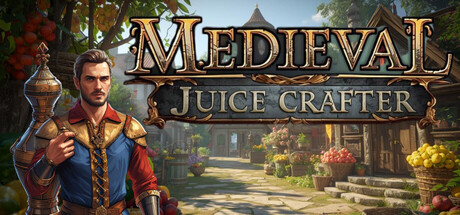
Developer: Timeless Rush





Player Statistics
Updated: November 8, 2026 2:56 AMAverage players
Players Online
Medieval Juice Crafter player count by month
Medieval Juice Crafter has 8 players in-game right now, and the 24-hour peak is 8. The peak so far in November 2026 is 8 players, 6 on average.
| Month | Average players | Change | Peak players |
|---|---|---|---|
| November 2026 (so far) | 6 | — | 8 |
From SteamStat's own samples of the Steam player count since tracking began. Change compares a month's average with the month before.
At a glance
Medieval Juice Crafter has 8 players in-game right now, 100% of its 24-hour peak of 8. The record since SteamStat started tracking it is 8 players, set on November 8, 2026. 91 Steam reviews rate it “Very Positive” (85% positive). It is free to play.
Description
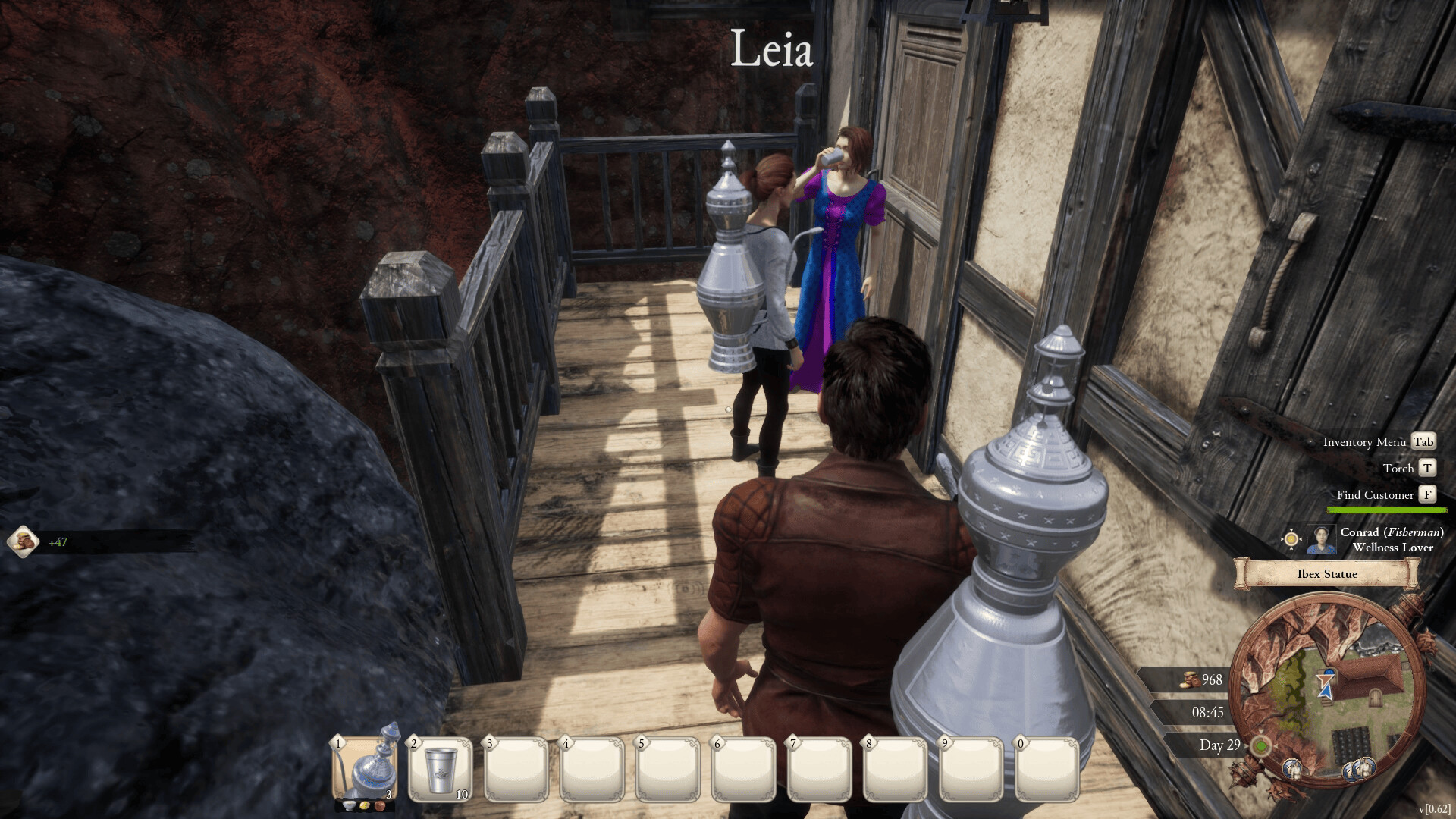
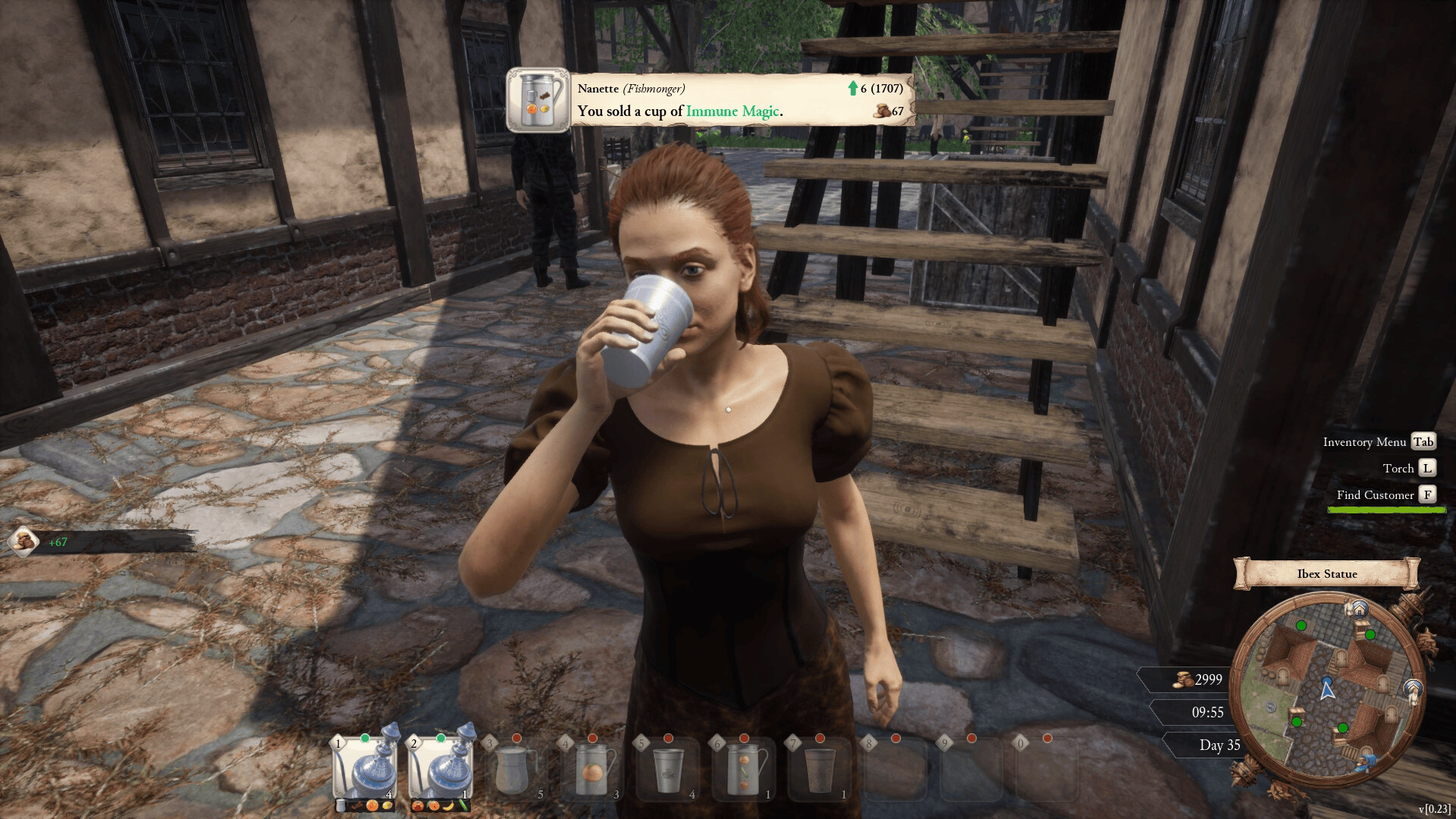
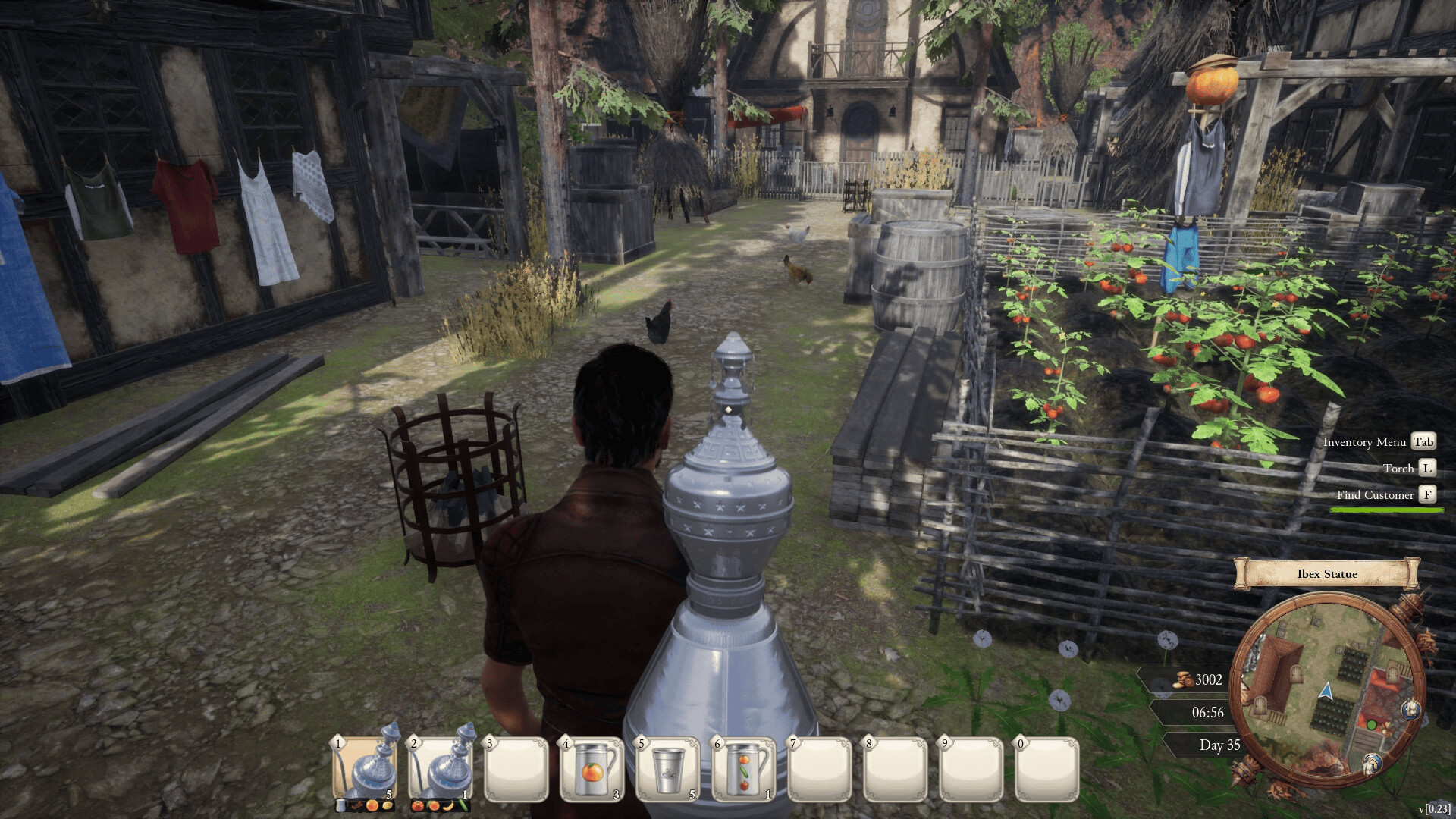
A simulation game where you sell your special recipe juices in medieval villages.
Work alone or with your friend to expand your business.
Co-Op Mode and Single Player
Share the duties with your friend in co-op mode (for up to 2 players).
You can also go solo and manage everything alone. You can invite your friend anytime if you change your mind.
Features
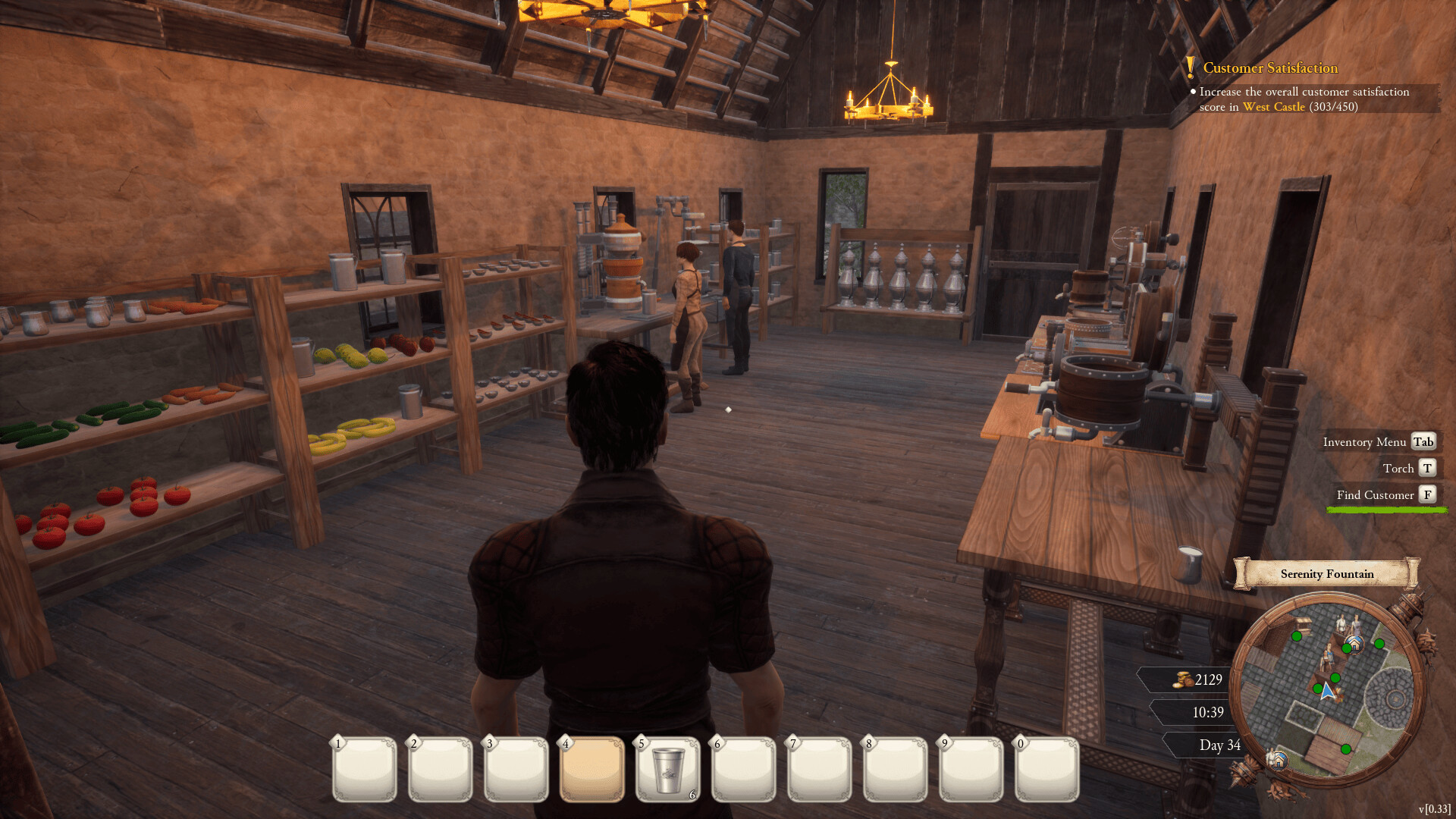
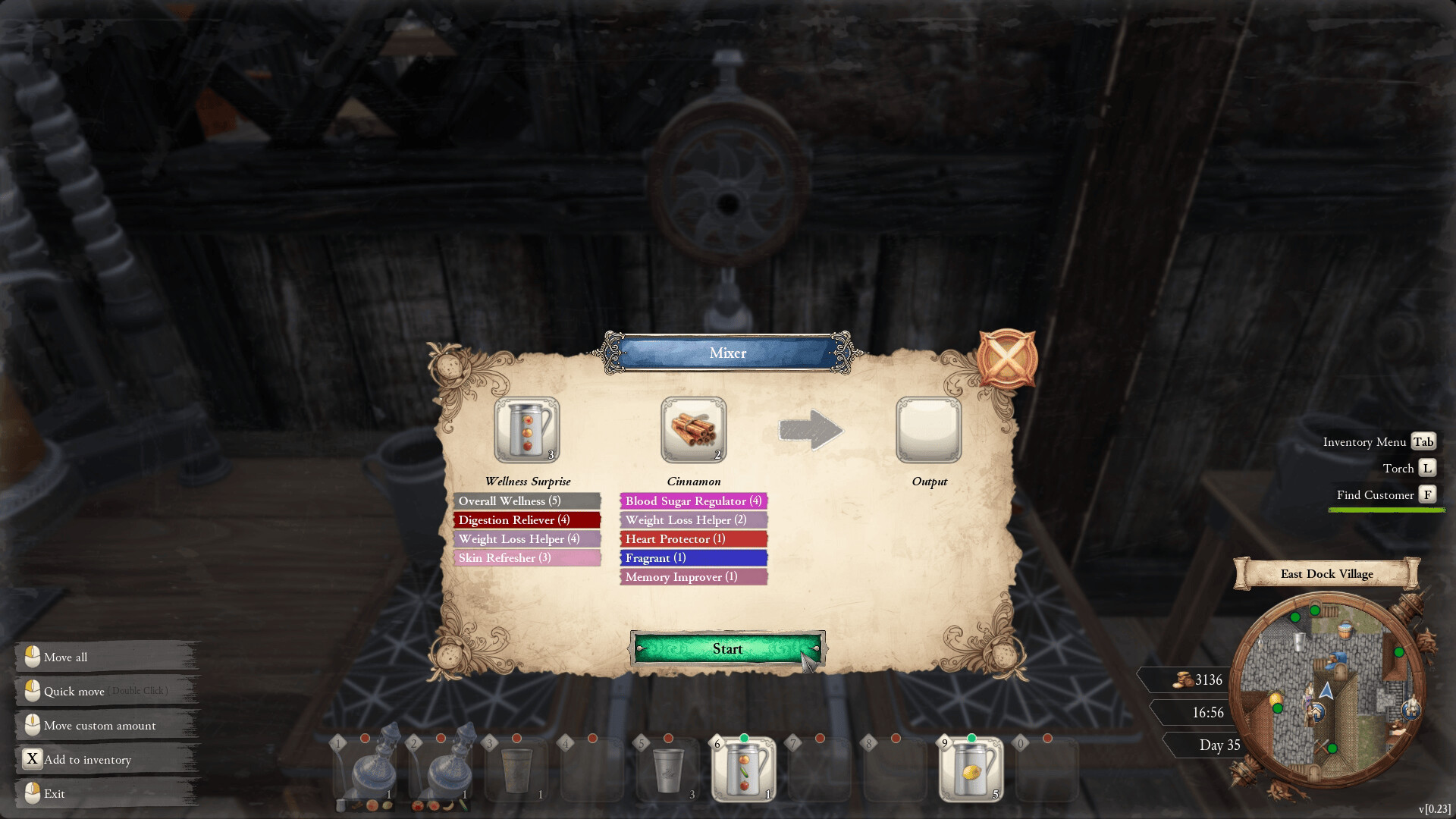
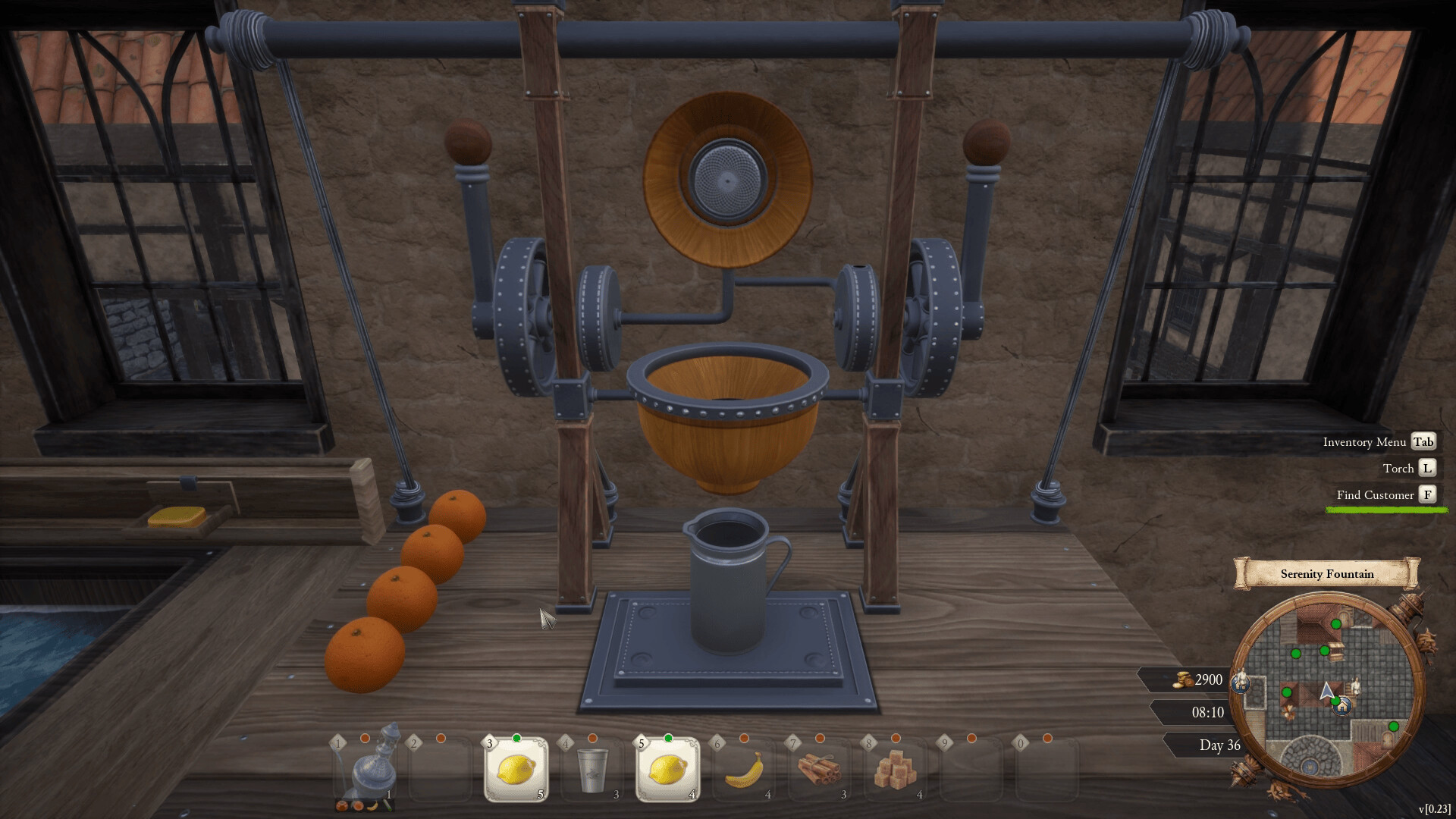
Buy fruits, vegetables, flowers, spices, herbs, sugar, milk, and yogurt to craft your special recipe juices.
Each ingredient has different effects (immunity booster, skin refresher, weight loss helper, hydration booster etc).
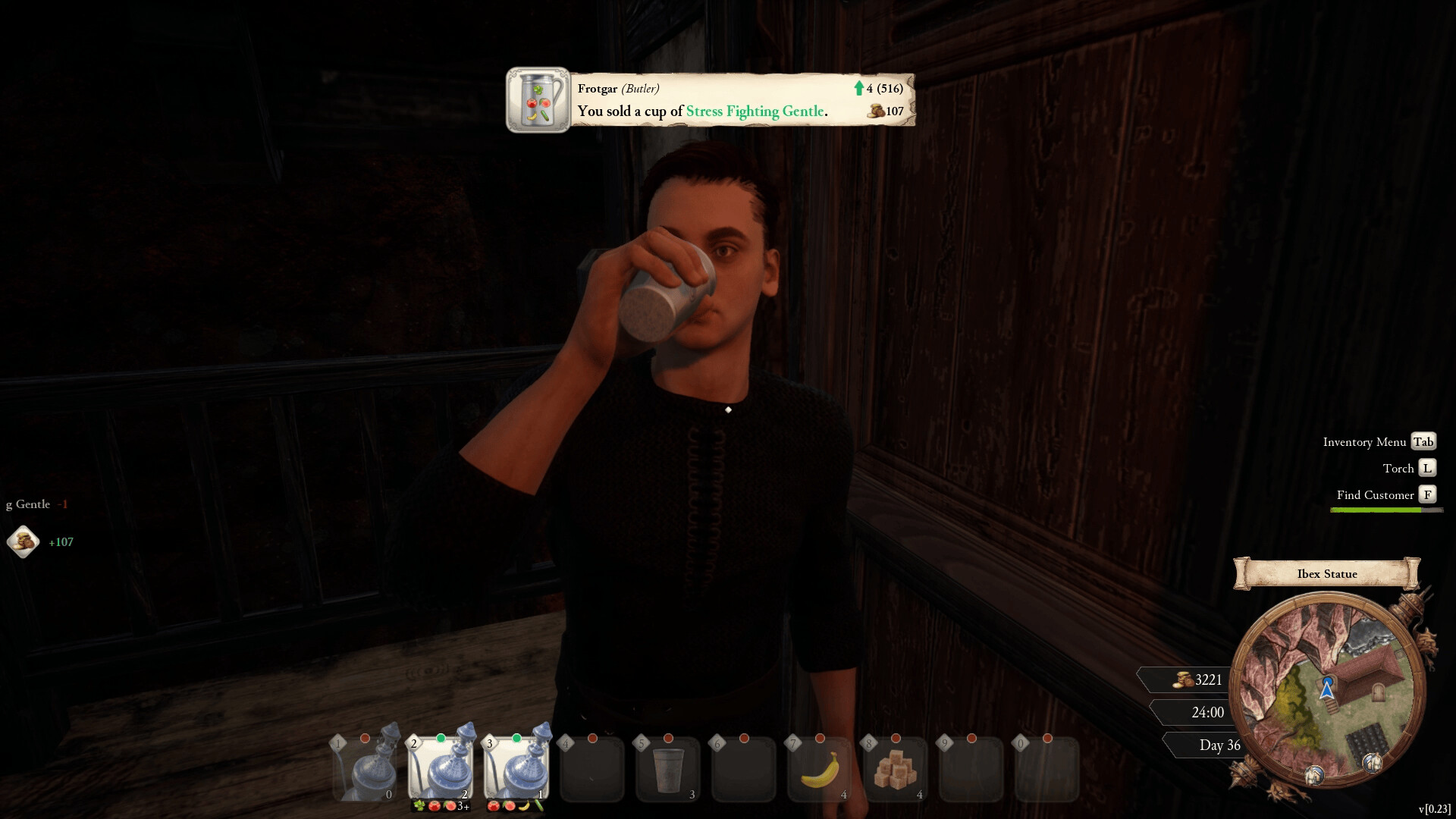
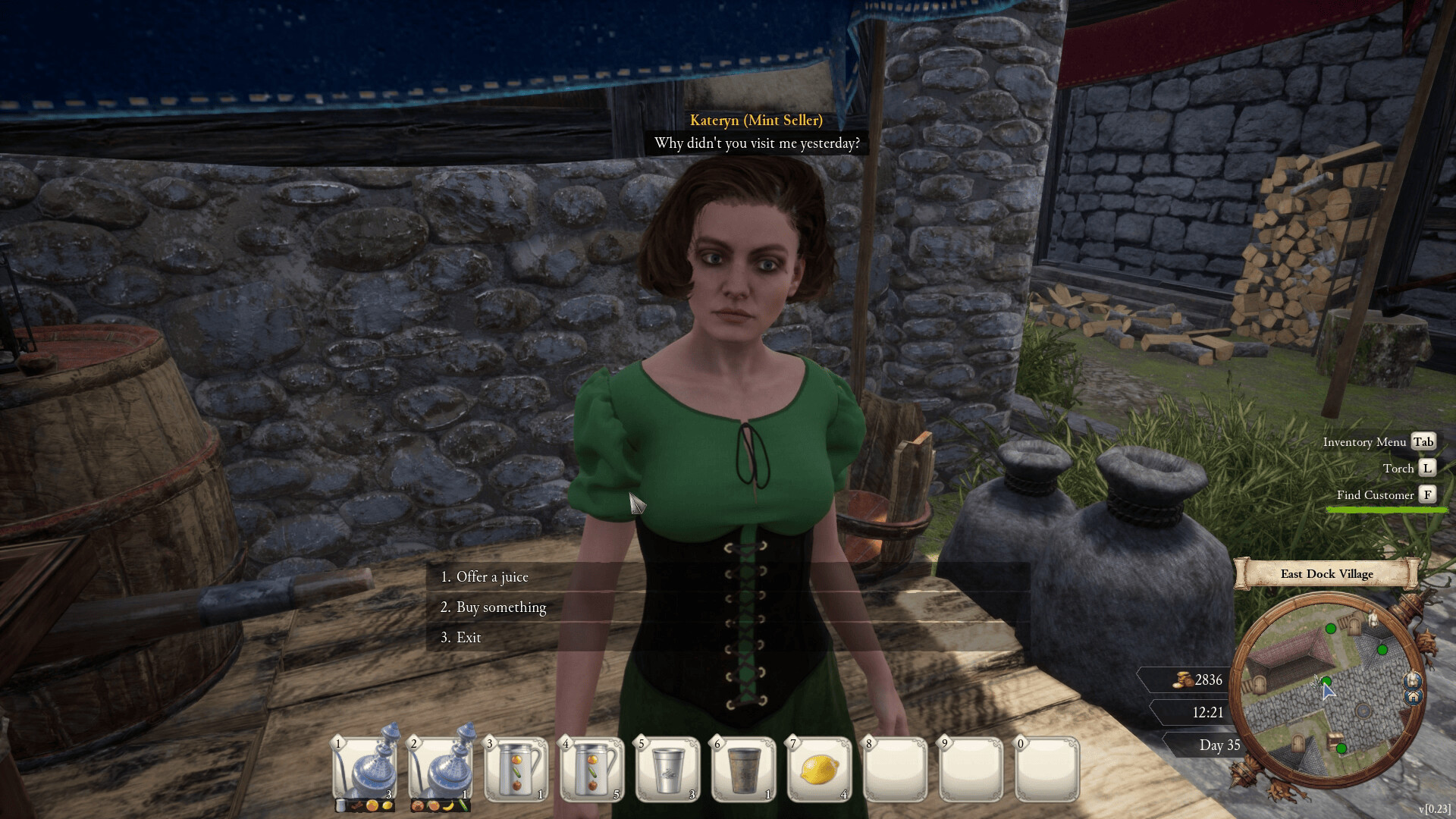
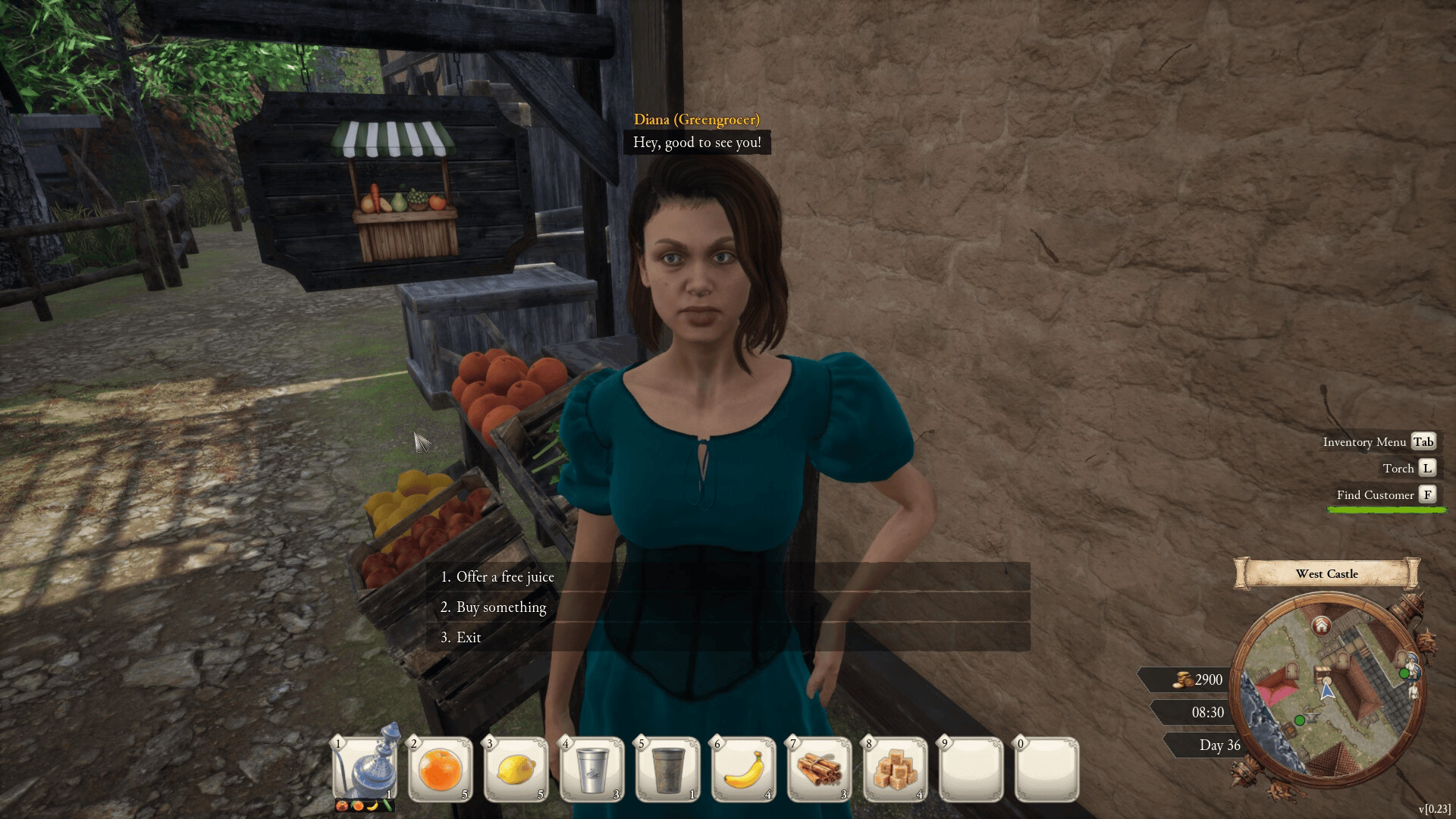
Interact with everyone in the villages to learn customer preferences, craft juices to achieve the desired effects, and make them your customers.
Send letters to your grandpa about your business status and receive his suggestions and machine designs.
Hire new teammates like a seller, citrus worker, dishwashing worker, juicer worker, mixing worker, and shopper.
Get permission to enter new villages, rent new workplaces, and expand your business throughout the new villages.
Supported languages: english, french, italian, german, spanish - spain, czech, japanese, korean, polish, portuguese - brazil, portuguese - portugal, russian, simplified chinese, spanish - latin america, thai, turkish, ukrainian
Something wrong on this page? Let us know
Description and screenshots are provided by the publisher via the Steam Store page.
System Requirements
Windows
- Requires a 64-bit processor and operating system
- OS *: Windows 7 64-bit | Windows 8 64-bit | Windows 10 64-bit
- Processor: Intel Core i5-11400F | AMD Ryzen 5 5600x
- Memory: 8 GB RAM
- Graphics: NVIDIA GeForce GTX 1060 | AMD Radeon R9-290X
- Network: Broadband Internet connection
- Storage: 5200 MB available space
- Requires a 64-bit processor and operating system
- OS *: Windows 7 64-bit | Windows 8 64-bit | Windows 10 64-bit
- Processor: Intel Core i5-13400F | AMD Ryzen 5 7600x
- Memory: 16 GB RAM
- Graphics: NVIDIA GeForce GTX 1070 | AMD Radeon RX-6600
- Network: Broadband Internet connection
- Storage: 5200 MB available space
Mac
Linux
User Reviews
A fun and interesting cooking simulator where we will make juices and sell them. For a couple of hours, you can paste with great interest!
Running a medieval juice business is a ridiculous concept, and somehow that's exactly why I love it. Experimenting with ingredients, figuring out what customers want and building up your little empire is surprisingly addictive.

Medieval Juice Crafter offers a refreshing interpretation of the business simulation genre by combining medieval village life with creative beverage production and entrepreneurial management. Developed by Timeless Rush and published by GrabTheGames and Gamersky Games, the game invites players to establish a juice-making business, experiment with ingredients, satisfy customers, and gradually expand their operations across multiple settlements. Its unusual premise distinguishes it from conventional shopkeeping simulators, presenting a relaxing yet potentially rewarding experience centered on crafting, resource management, and commercial growth.
The foundation of the gameplay involves purchasing ingredients and transforming them into customized beverages. Players can experiment with fruits, vegetables, flowers, spices, herbs, sugar, milk, and yogurt to create distinctive juice recipes. Each ingredient possesses specific properties associated with benefits such as improved hydration, immunity support, skin care, and weight management. This system introduces an interesting layer of decision-making because successful beverage preparation requires more than randomly combining available resources. Understanding ingredient characteristics and creating appropriate mixtures becomes essential to satisfying customer expectations.
Customer interaction plays an important role in establishing a successful enterprise. Rather than simply selling products to anonymous buyers, players are encouraged to communicate with villagers, discover their individual preferences, and prepare beverages that address their particular needs. This approach adds personality to the commercial experience while connecting exploration and social interaction with business development. Learning what customers want provides meaningful direction for recipe experimentation, potentially making each successful transaction feel more rewarding.
Business expansion represents another significant component of the experience. Starting with a modest operation, players gradually work toward establishing additional workplaces in different medieval villages. Progression involves obtaining permission to enter new settlements, renting commercial spaces, and organizing the resources necessary to maintain multiple operations. This structure creates a satisfying sense of advancement, transforming a small beverage business into an increasingly ambitious enterprise. The opportunity to expand beyond a single location gives players a long-term objective that complements everyday crafting activities.
Employee management introduces additional strategic possibilities. Players can recruit workers responsible for selling beverages, processing citrus ingredients, washing dishes, operating juicing machines, mixing drinks, and purchasing supplies. These specialized positions create opportunities to distribute responsibilities and improve workplace efficiency. As production demands increase, assigning employees to appropriate tasks becomes an important consideration. The ability to delegate routine activities also allows players to concentrate on recipe development, customer satisfaction, and broader business decisions.
One particularly charming feature involves exchanging letters with the protagonist's grandfather. Players can communicate their business progress and receive helpful suggestions alongside designs for new machines. This mechanic adds a personal dimension to the management experience while providing an interesting connection between family correspondence and technological advancement. It gives the progression system additional character, making equipment development feel more meaningful than simply purchasing upgrades through conventional menus.
Cooperative multiplayer is another attractive feature, allowing two players to operate their business together. Friends can divide responsibilities, coordinate production activities, and collaborate on expanding their commercial operations. The ability to invite another player without abandoning an existing solo experience provides welcome flexibility. Meanwhile, those who prefer independent management can complete the experience alone. This combination of cooperative and single-player functionality makes the game suitable for different preferences.
The medieval atmosphere provides an entertaining backdrop for the otherwise familiar mechanics of crafting and commercial management. Establishing a beverage enterprise within traditional villages creates an amusing contrast between historical surroundings and modern concepts of specialized health-oriented drinks. Rather than emphasizing strict historical realism, the game embraces a playful interpretation of medieval entrepreneurship. Its setting contributes to the overall charm while helping distinguish the experience from contemporary restaurant and retail simulators.
Despite its appealing concept, several potential limitations deserve consideration. The repeated process of acquiring ingredients, preparing beverages, and serving customers could eventually become monotonous without sufficient recipe variety or meaningful progression. Similarly, managing several workplaces may introduce repetitive responsibilities if employee automation lacks flexibility. The long-term enjoyment of the experience will depend on how effectively its crafting, customer interaction, and expansion systems continue introducing worthwhile challenges.
The game includes Steam achievements, Steam Cloud support, and multiple language options, providing additional convenience and accessibility. Its emphasis on resource management and gradual progression should particularly appeal to players who enjoy optimizing production processes and watching their businesses develop over time. However, those seeking intense action, complex combat, or substantial narrative depth may find its slower, management-oriented structure less engaging.
Steam Deck compatibility is officially categorized as Playable rather than fully Verified. Performance with the default graphics configuration is considered suitable, and the game can run successfully on SteamOS. However, handheld players should expect compromises. Some functionality is not fully accessible through the default controller configuration, touchscreen interaction or a community controller layout may occasionally be useful, and text entry can require manually opening the virtual keyboard. Some interface text may also appear small, while certain prompts can display keyboard, mouse, or non-Steam Deck controller icons. It is therefore functional on the Deck, but the experience is less seamless than a fully optimized handheld release.
Overall, Medieval Juice Crafter presents an imaginative business simulation concept with an appealing combination of ingredient experimentation, personalized customer service, employee management, and cooperative gameplay. Its strongest qualities are the interconnected crafting and progression systems, the opportunity to expand into multiple villages, and the charming correspondence mechanic involving the protagonist's grandfather. While repetitive activities and uncertain handheld compatibility are potential drawbacks, its distinctive premise provides an enjoyable foundation for players interested in creative management experiences. Based on its advertised features rather than verified hands-on gameplay, it appears particularly promising for enthusiasts of crafting and business development simulations.
A promising medieval business simulator with creative beverage crafting, engaging management possibilities, and flexible cooperative gameplay. Its unusual concept and structured progression make it worth considering, although its long-term variety and Steam Deck performance remain uncertain.
Rating: 8/10
A cozy simulator about a medieval juice business. I liked the recipes, the development of the workshop and the cooperative. Sometimes it's a bit monotonous, but the game is addictive and gives a pleasant atmosphere
Games about business often boil down to accumulating numbers, but here there’s also a human side. You ask villagers about their preferences, write to grandpa, get advice and machine blueprints in reply, and hire workers for different tasks. Because of this the game feels more like a small story about growing a business than a spreadsheet. The two-player co-op is flexible: you can play solo and invite a friend at any time. Achievements and cloud saves are in place too. The only thing I’d note is that the system requirements aren’t the lightest for this kind of game.
Games similar to Medieval Juice Crafter





Additional Information
| Developer | Timeless Rush |
| Platforms | Windows |
| Age rating | None |
| Release date | Unknown |
| User reviews | 85% positive (91) |