
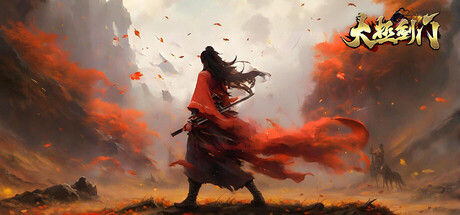
Developer: 大魔头


Player Statistics
Updated: November 8, 2026 4:03 AMAverage players
Players Online
太极剑门 player count by month
太极剑门 has 1 players in-game right now, and the 24-hour peak is 1. The peak so far in November 2026 is 2 players, 2 on average.
| Month | Average players | Change | Peak players |
|---|---|---|---|
| November 2026 (so far) | 2 | — | 2 |
From SteamStat's own samples of the Steam player count since tracking began. Change compares a month's average with the month before.
At a glance
太极剑门 has 1 players in-game right now, 100% of its 24-hour peak of 1. The record since SteamStat started tracking it is 2 players, set on November 7, 2026. 10 Steam reviews rate it “Mixed” (60% positive). Released on April 11, 2026 by 大魔头. It is free to play.
Description
The Central Plains are vast and rich in resources, producing generations of outstanding talents. Only by cultivating oneself can one walk alone in the martial arts world and unify the entire realm.
1. The equipment attributes in this game are randomly generated. Items can be forged and enhanced, resulting in diverse final attribute variations.
II. This game features over three hundred martial arts masteries, each of which can enhance one's physique and lead to unparalleled mastery.
3. You can create your own guild and establish your territory in the Central Plains by placing your sect stone in the area.
4. Numerous dungeons, including eerie and terrifying underground tombs, monster-infested catacombs, icy palaces, imperial mausoleums filled with treasures, and one-on-one battles against the Taiji Gentleman.
5. Team up to fight monsters, or you can log off and leave the game running—strike a balance between work and rest.
6. Increase the use of elixirs to quickly level up martial arts by 10 tiers, reducing the need for prolonged idle gameplay.
7. Add an auction house for item consignment, allowing players to both consign their own items and purchase others' items.
Countless memories, classic nostalgia—hurry into the game and experience it now!
Supported languages: simplified chinese
Something wrong on this page? Let us know
Description and screenshots are provided by the publisher via the Steam Store page.
System Requirements
Windows
- OS *: Windows xp
- Processor: Intel 386
- Memory: 4000 MB RAM
- OS *: Windows xp
- Processor: Intel 386
- Memory: 4000 MB RAM
User Reviews

太极剑门 is a traditional Chinese martial arts MMORPG that attempts to revive the charm of classic online role-playing games through extensive character progression, equipment customization, and competitive multiplayer activities. Developed by 大魔头 and published by 魔头派, the game draws inspiration from the Millennium series while introducing conveniences intended to reduce excessive grinding. Its nostalgic design emphasizes personal cultivation, territorial control, and cooperation between players rather than cinematic storytelling or modern graphical spectacle. Although its ambitions are appealing, the experience is primarily suited to enthusiasts of old-school martial arts MMORPGs who appreciate gradual progression and persistent online competition.
The adventure takes place within the Central Plains, a world where aspiring warriors pursue strength, prestige, and influence through martial arts cultivation. Rather than presenting an elaborate narrative filled with scripted events, the game establishes a relatively straightforward premise centered on becoming a powerful martial artist. This approach allows progression and player interaction to occupy the foreground, encouraging individuals to establish their own objectives. However, those expecting extensive character development, meaningful dialogue, or intricate storytelling may find the narrative framework rather limited. The setting provides an appropriate atmosphere for martial arts adventures, but its greatest appeal comes from the systems surrounding character advancement.
One of the game's most substantial features is its collection of more than three hundred martial arts masteries. Each mastery contributes to physical development, providing a considerable foundation for long-term character improvement. This system encourages players to invest time in training and refining their abilities while pursuing increasingly powerful character builds. The large selection creates the potential for experimentation, although the actual depth depends on how meaningfully these abilities differ. If progression primarily involves repetitive training for incremental statistical improvements, the impressive number of masteries could eventually feel overwhelming rather than rewarding. Nevertheless, martial arts cultivation remains a compelling centerpiece for players who enjoy methodical advancement.
Equipment progression adds another dimension through randomly generated attributes, forging, and enhancement mechanics. Items can possess different statistical combinations, encouraging players to seek equipment that complements their preferred approach to combat. The possibility of upgrading equipment introduces additional objectives beyond simply acquiring stronger weapons and armor. Randomized attributes can make collecting equipment exciting, particularly when obtaining an unusually effective combination. However, this design also risks encouraging repetitive farming, especially when desirable improvements depend heavily on chance. Its long-term success will depend on whether the rewards justify the resources and effort invested.
Dungeon exploration provides opportunities to test character development against increasingly challenging enemies. The advertised environments include underground tombs, monster-infested catacombs, frozen palaces, and imperial mausoleums containing valuable treasures. These locations suggest a variety of atmospheric encounters, while individual battles against the Taiji Gentleman offer another form of challenge. Cooperative monster hunting further strengthens the multiplayer foundation by allowing players to combine their abilities. Although these activities sound promising, the available information does not establish how distinctive their encounters or enemy mechanics actually are. Dungeon variety will matter considerably because repetitive combat can become tiresome when encounters offer little beyond statistical difficulty.
Guild mechanics introduce an especially interesting competitive element. Players can create organizations and establish territorial influence by placing sect stones throughout the Central Plains. This system encourages teamwork, territorial rivalry, and organized conflict between competing groups. The developers also advertise a proprietary engine designed to accommodate PvP battles involving thousands of simultaneous participants. If successfully implemented, such encounters could provide memorable large-scale conflicts. However, the advertised technical capacity remains difficult to assess without independent performance evidence. Server stability, connection quality, combat responsiveness, and active player population will ultimately determine whether these ambitious multiplayer features deliver satisfying results.
The progression system also incorporates conveniences intended to accommodate players with limited time. Cooperative monster hunting can be supplemented by relatively passive advancement, while special elixirs reportedly accelerate martial arts development by ten tiers. These mechanics reduce the pressure associated with prolonged training sessions and may appeal to players balancing gaming with other responsibilities. However, excessive reliance on accelerated progression can undermine the satisfaction of mastering difficult systems through active participation. The auction house adds another useful feature, enabling players to trade equipment and participate in an interconnected economy. Because the game includes in-app purchases, competitive balance is another consideration, although the available description does not establish whether spending provides meaningful advantages.
Visually, the game embraces a traditional 2D aesthetic that reinforces its nostalgic identity. Rather than pursuing elaborate environments and cinematic presentation, it prioritizes familiar MMORPG systems and persistent character development. This direction may appeal to longtime enthusiasts, but players accustomed to modern animations and sophisticated graphical effects could find the presentation dated. Accessibility is another significant concern because Simplified Chinese is the only officially supported language. Without English localization, understanding equipment statistics, martial arts descriptions, and multiplayer systems may prove difficult for international audiences.
Steam Deck compatibility is currently Unknown or Unverified, with no confirmed official Verified or Playable designation. Although its relatively modest technical requirements might suggest potential handheld suitability, the Windows-focused specifications do not guarantee compatibility with SteamOS. Controller support, interface readability, and online functionality also remain uncertain. Players intending to use a Steam Deck should therefore approach compatibility cautiously.
Overall, 太极剑门 offers an intriguing combination of traditional martial arts cultivation, extensive equipment progression, cooperative exploration, and territorial PvP. Its free-to-play accessibility and nostalgic MMORPG philosophy provide a reasonable foundation for dedicated enthusiasts. However, uncertain technical performance, limited localization, potentially repetitive progression, and unverified handheld compatibility prevent an unconditional recommendation. It is most appealing to players who value long-term character development and competitive guild activities over narrative sophistication or contemporary presentation.
A promising but specialized martial arts MMORPG with considerable progression potential, tempered by accessibility limitations and multiplayer ambitions that still require stronger practical validation.
Rating: 6/10
太极剑门 is a free to play 2D MMORPG that feels like it is deliberately going for an old school martial arts game style. I start out in a world built around the idea of learning martial arts, improving my character and slowly becoming stronger. The game has a lot of systems packed into a fairly simple looking package, including random equipment, crafting, strengthening gear, hundreds of martial arts techniques, dungeons, guilds and PvP. I like that it does not try to hide what it is. It is basically about building up my character and seeing how far I can take them.
The martial arts system is probably the biggest reason I would keep playing. There are more than 300 different martial arts techniques, so there is a lot for me to work towards even if I am not interested in collecting everything. Training can normally take a lot of time, but the game also lets me use elixirs to increase martial arts levels much faster. I like having the option because it makes the progression less painful when I want to focus on actually playing instead of leaving the game running for ages.
The equipment system is also more interesting than it first looks. Equipment has randomly generated attributes, and I can forge and strengthen items to try and improve my setup. That means finding a new piece of gear is not simply about checking whether the main number is higher. I have to look at the actual properties and decide whether something is worth keeping or improving. There is also an auction house where I can sell items and buy things from other players, which gives all the equipment I collect another purpose.
There is quite a bit of group content as well. I can enter different dungeons with their own themes, including underground areas, monster filled locations, an ice palace and imperial tombs. There are also boss encounters such as the Taiji Gentleman, while guilds let me create my own sect and establish territory in the Central Plains. I like that the game gives me reasons to work towards becoming stronger rather than making the whole experience about fighting random enemies in the same areas.
The biggest issue for me is the presentation. The 2D visuals have that very old fashioned MMORPG look, and while I can appreciate the nostalgic style, it also makes the game feel dated. The interface and overall design are not especially welcoming either, so I have to spend some time getting used to how everything works. The game is also only officially supported in Simplified Chinese, which is a major limitation for me because there is no English interface or English audio. That makes understanding all of the martial arts, equipment and systems much harder if I cannot read Chinese.
I also think the progression is going to feel very grind heavy. The game is designed around training, improving equipment and getting stronger over time, and it even includes offline idle progression so I can continue working on my character while I am away. That fits the old school MMORPG style, but it means I am spending a lot of time watching numbers slowly improve. The free to play model also includes in game purchases, so I have to be aware that the progression is built around long term investment rather than giving me a quick path through everything.
Overall, 太极剑门 has a surprising amount going on for a simple looking free MMORPG. I like the huge number of martial arts techniques, random equipment, crafting and strengthening, dungeons, guilds, trading and the ability to progress while offline. The old fashioned presentation, heavy grinding and especially the lack of English support make it much harder for me to fully enjoy, though. I think there is a decent martial arts RPG underneath the dated exterior, but it is clearly aimed at a very specific audience and I have to be willing to put up with the slower progression and language barrier. For me, the depth is good enough to make it interesting, but the accessibility problems keep it from reaching the higher ratings.
Rating: 7.4/10


Additional Information
| Developer | 大魔头 |
| Platforms | Windows |
| Age rating | None |
| Release date | April 11, 2026 |
| User reviews | 60% positive (10) |