

Developer: OLR Games
At a glance
15 Steam reviews rate it “Mixed” (67% positive). Released on December 15, 2025 by OLR Games. It is free to play.
Description
Fast, flashy, and free.
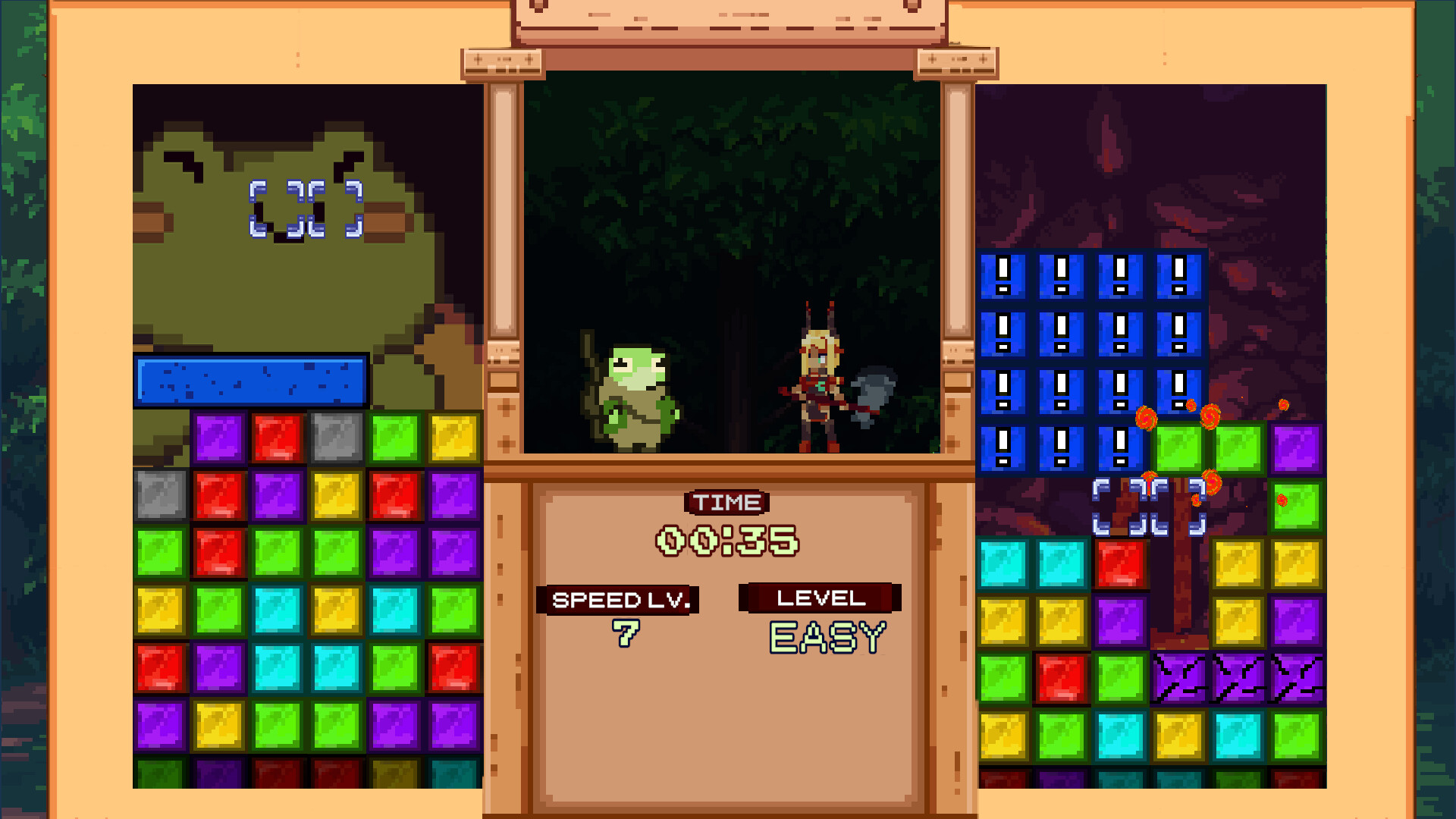
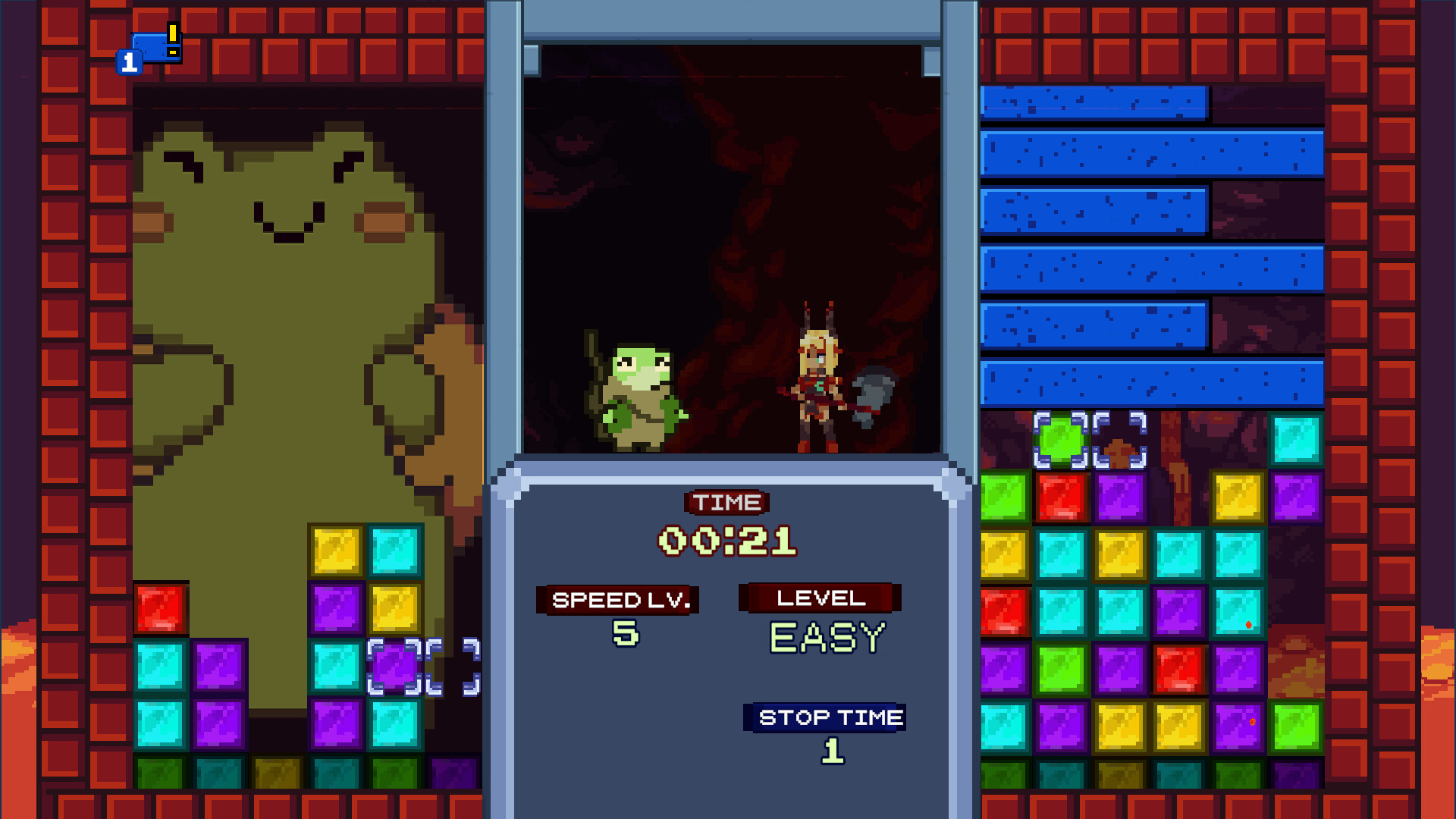
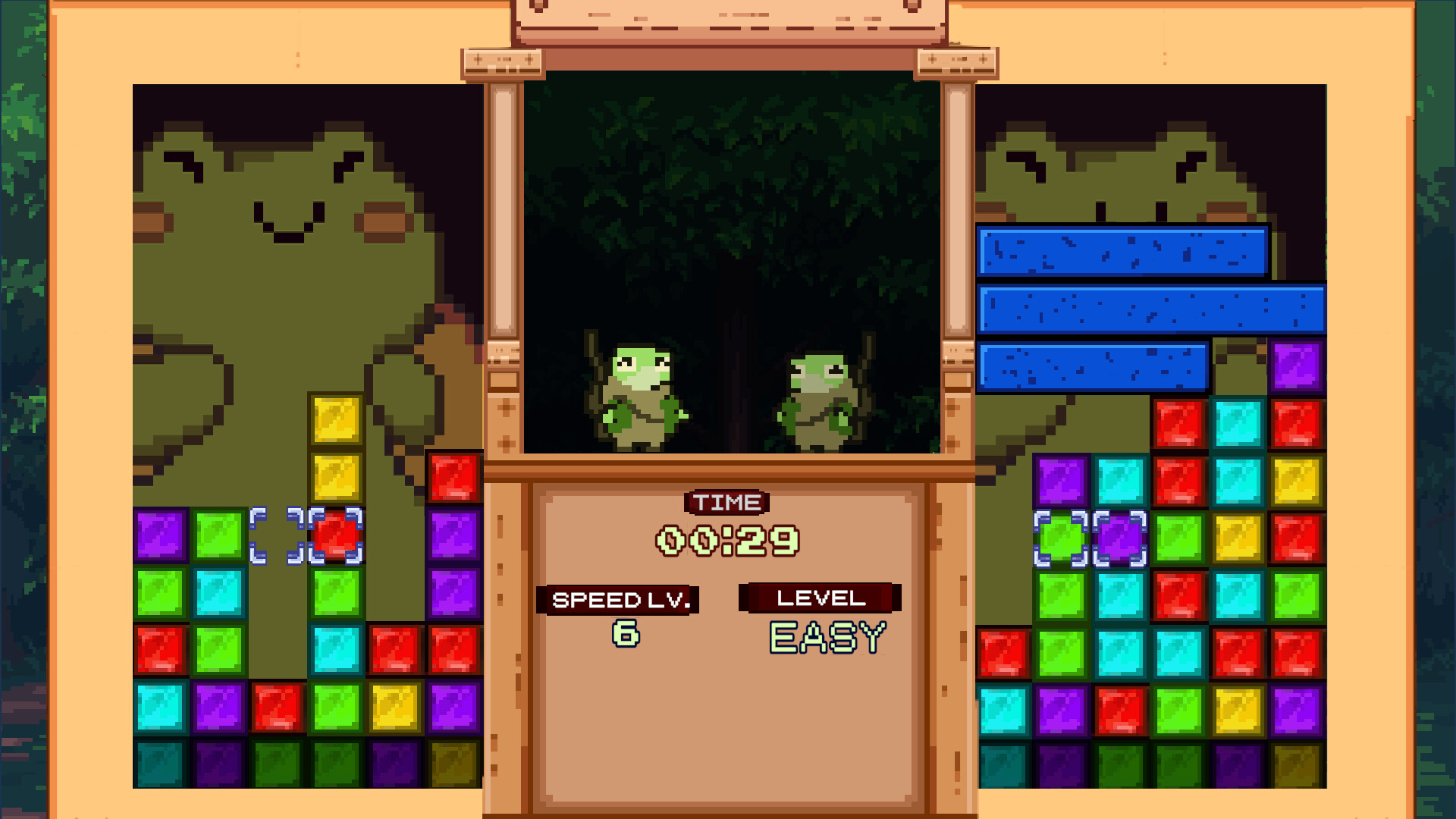
A modern twist on classic Panel de Pon / Tetris Attack–style match-3 action. Swap tiles, trigger insane chains, and push your skills to the limit as the board rises beneath you. Easy to learn, hard to master, and built for pure, arcade-speed fun.
Features:
Combo-driven match-3 gameplay
Multiple modes for chill or challenge
100% free
Play solo or with challenge your friends
Jump in and Chain big
Supported languages: english
Something wrong on this page? Let us know
Description and screenshots are provided by the publisher via the Steam Store page.
System Requirements
Windows
- OS *: Microsoft® Windows® 7 / 8 / 10
- Processor: 1.2GHz processor
- Memory: 512 MB RAM
- Graphics: DirectX Compatible graphics card with at least 32MB of video memory
- DirectX: Version 9.0c
- Storage: 300 MB available space
- OS *: Microsoft® Windows® 7 / 8 / 10
- Processor: 1.4GHz processor or faster
- Memory: 1 GB RAM
- Graphics: Graphics: DirectX Compatible graphics card with at least 32MB of video memory
- DirectX: Version 9.0c
- Network: Broadband Internet connection
- Storage: 300 MB available space
User Reviews

Panel Attack is a compact arcade puzzle game developed by OLR Games and published by OLRGames. Built around the familiar concept of swapping adjacent panels to form matching groups, the game takes a simple foundation and turns it into a demanding test of observation, speed, planning, and execution. Its inspirations are easy to recognize, particularly for players familiar with classic panel-swapping puzzle games, but the focus here is less about reinventing the genre and more about providing a straightforward modern interpretation that can be enjoyed casually or approached as a serious skill-based challenge.
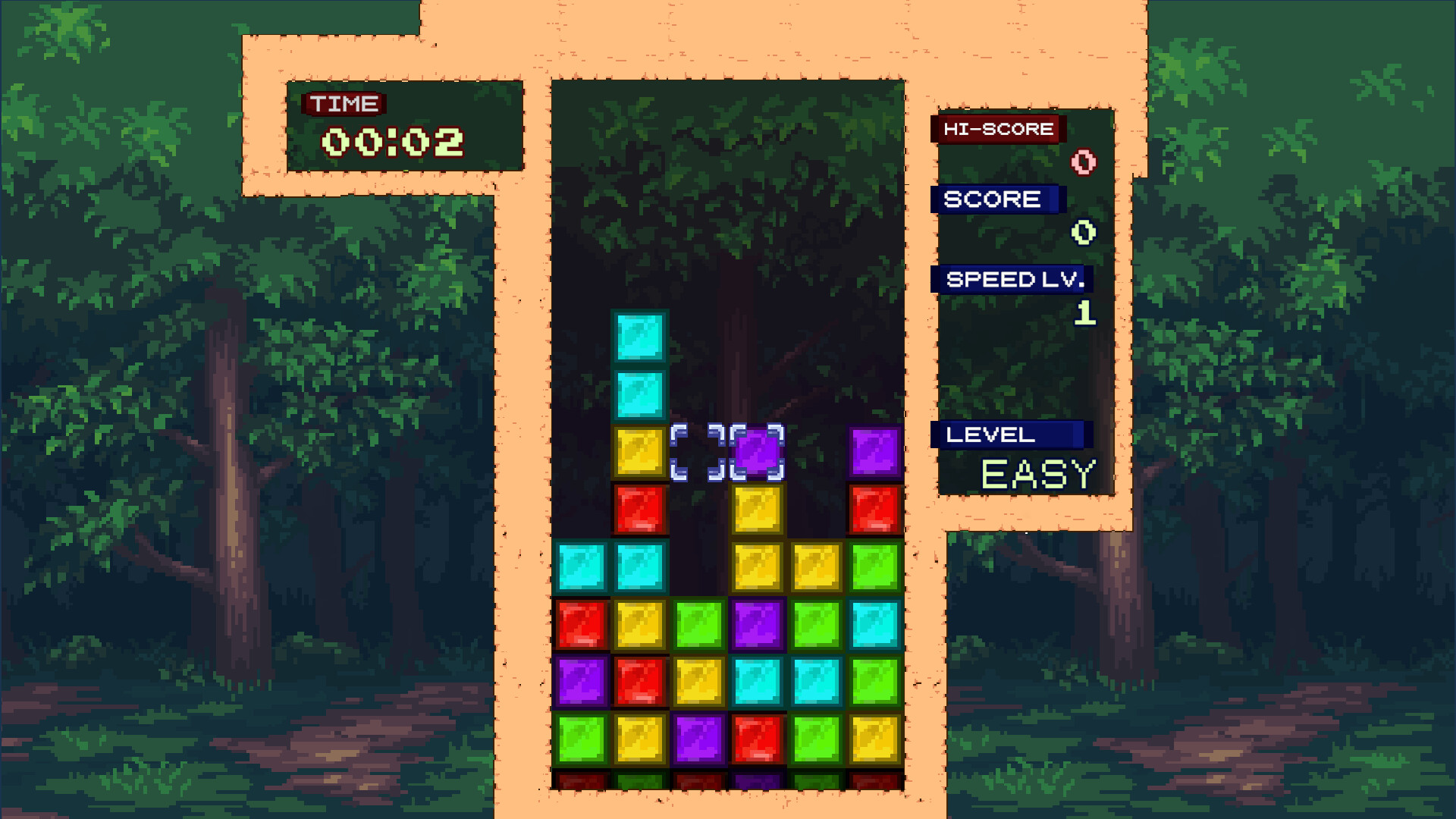
The basic objective is immediately understandable. Colored panels fill the playfield, and the player swaps neighboring pieces to create matches that remove panels from the board. What initially feels like an uncomplicated matching system becomes considerably more challenging once the playfield begins rising and available space becomes increasingly limited. This constant upward pressure prevents players from spending too much time considering every possible move. Decisions have to be made quickly, and mistakes that seem insignificant during a calm moment can become dangerous when the upper portion of the board starts filling.
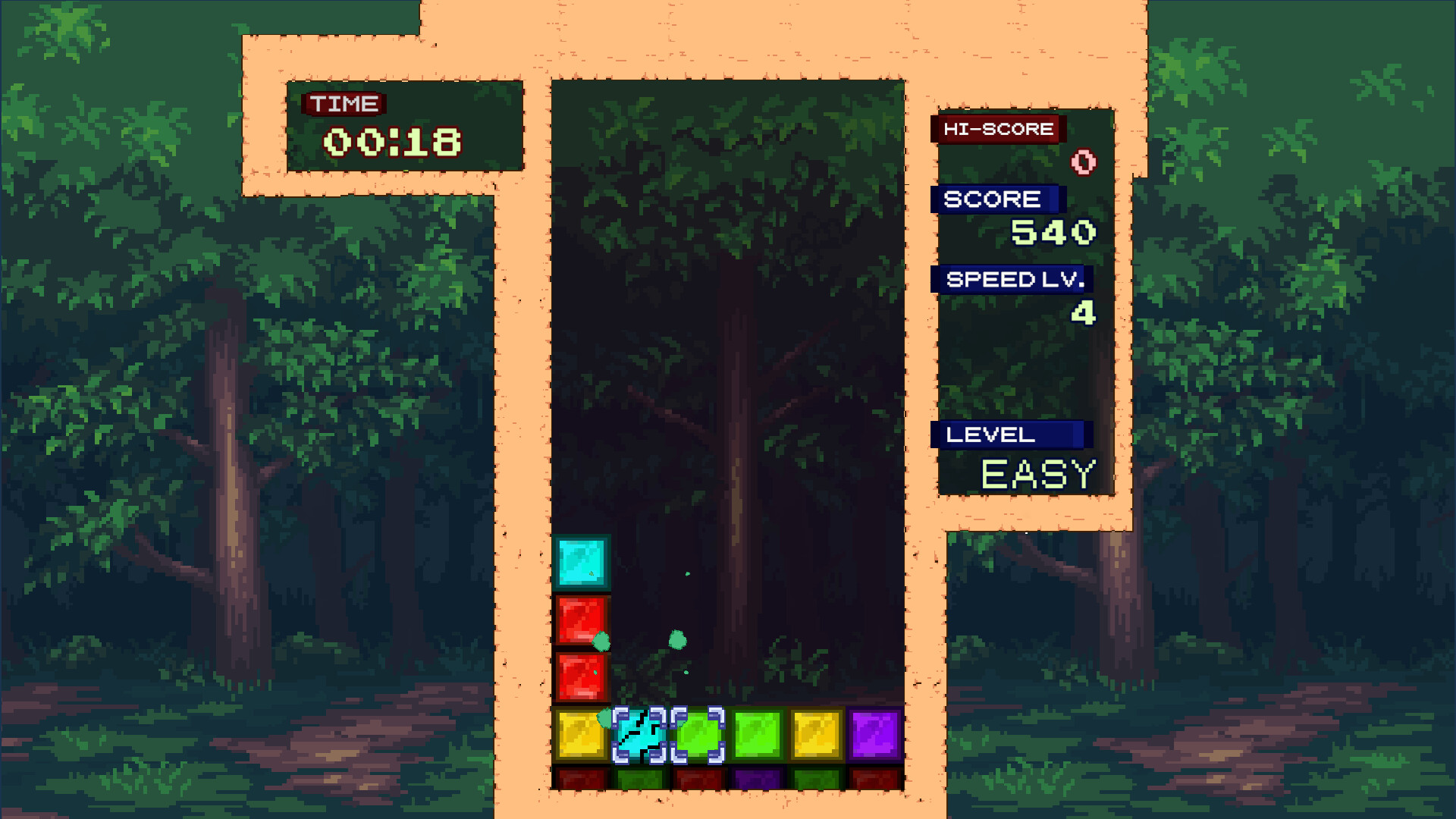
Where Panel Attack becomes substantially more interesting is through its emphasis on combinations and chains. Clearing panels individually can keep a session alive, but learning how pieces interact after a match creates opportunities for more elaborate sequences. Panels falling into newly opened spaces can produce additional matches, rewarding players who understand how to arrange the board several moves ahead. Successfully constructing these chains is satisfying because they are the result of preparation and quick execution rather than simple luck. The mechanics are accessible enough for beginners while still offering a considerable skill ceiling for players interested in mastering them.
This distinction between understanding the rules and mastering their possibilities is one of the game's strongest qualities. Almost anyone can recognize matching colors and learn how swapping works within a short period, but consistently controlling a rapidly changing board is another matter. Experienced players can begin thinking beyond the immediate match, preparing panels for future combinations while simultaneously preventing the playfield from becoming unmanageable. As the pace increases, the experience becomes a mixture of pattern recognition and reflexive decision-making where maintaining concentration is just as important as understanding strategy.
Panel Attack also benefits from offering different ways to approach its puzzle mechanics rather than limiting the experience to a single endless format. Its selection of modes supports both more relaxed sessions and competitive challenges, while multiplayer functionality makes the underlying mechanics particularly suitable for playing against or alongside other people. Solo play works well for practicing techniques and improving consistency, but multiplayer introduces another form of pressure because players are no longer simply fighting against their own mistakes. This makes the game potentially more engaging for groups of puzzle enthusiasts who enjoy turning mechanical mastery into direct competition.
Visually, the game follows an appropriately functional approach. Puzzle games built around rapidly identifying colored panels need clarity more than elaborate graphical effects, and Panel Attack keeps its presentation centered on the board and the information necessary to make quick decisions. Its 2D arcade appearance suits the speed of the gameplay and helps preserve readability when several events are happening in quick succession. The presentation may not be the main reason to play, but that simplicity complements the mechanics instead of distracting from them.
Another advantage is how lightweight and accessible the overall package is. The game does not demand powerful computer hardware or a large amount of storage space, which fits the uncomplicated nature of its design. More importantly, Panel Attack is offered as a free game, significantly reducing the barrier to trying it. For a relatively specialized puzzle formula, this is especially beneficial because curious players can experiment with the mechanics without having to decide whether the concept justifies an upfront purchase.
The biggest potential weakness comes from the familiarity of its foundation. Panel Attack openly draws inspiration from established panel-swapping puzzle games, and anyone with extensive experience in that genre is unlikely to view its central mechanics as revolutionary. Players expecting a major narrative component, extensive exploration, character progression, or constant mechanical reinvention will also find that the game's priorities lie elsewhere. Its longevity depends primarily on whether the player finds satisfaction in improving technique, producing longer chains, reacting faster, handling increasing pressure, and competing through essentially the same core puzzle system.
That focused design is also part of the game's charm. Panel Attack does not need excessive complexity to produce challenge because the difficulty emerges naturally from the interaction between simple controls, a rising board, increasingly limited reaction time, and the player's desire to create more effective combinations. Short sessions can be entertaining without demanding a major commitment, while players who become invested in mastering the system have reasons to return and improve their performance. This balance between accessibility and mechanical depth is arguably the most important achievement of the game.
Overall, Panel Attack is an enjoyable interpretation of the classic panel-swapping puzzle formula that prioritizes responsiveness, chains, speed, and replayable arcade competition. It does not attempt to disguise its influences or transform the genre into something completely different. Instead, it embraces a proven concept and concentrates on the qualities that make this type of puzzle game enduringly enjoyable. The straightforward rules make it welcoming to newcomers, while the increasing pressure and potential complexity of chain construction provide a meaningful challenge for experienced players. Combined with multiple modes, multiplayer possibilities, modest system requirements, and free access, it represents a worthwhile option for anyone who enjoys fast puzzle games built around mechanical improvement.
Rating: 6/10
It's really good !
Why is it so hard to play panel de pon on PC? Why hasn't anyone made it yet? This is the only version that I know of on steam and it sucks my fucking cock. All you had to do was make the controls AS RESPONSIVE AS A GAME from 1995. Ignore all reviews that say "waah negative review because I couldn't play this with my discord friends because the online is bad or something" this game is a piece of shit fundamentally and isn't suitable for anyone.
The gameplay is fine, but unstable. When I practice against the cpu, the game will ignore movement and swapping inputs when the time is desperate and force a loss as a result. This needs to be addressed being that this is a fast-paced competitive puzzle game that can be played between two humans. There is no point of suspenseful situations if it's going to be impossible to get out of it to begin with.
I like having a game to play while chatting with friends, but sometimes I need something that isn't super involved. This game was exactly what I was looking for. Plus, it's free and you can't beat free!
Games similar to Panel Attack




Additional Information
| Developer | OLR Games |
| Platforms | Windows |
| Age rating | None |
| Release date | December 15, 2025 |
| User reviews | 67% positive (15) |